
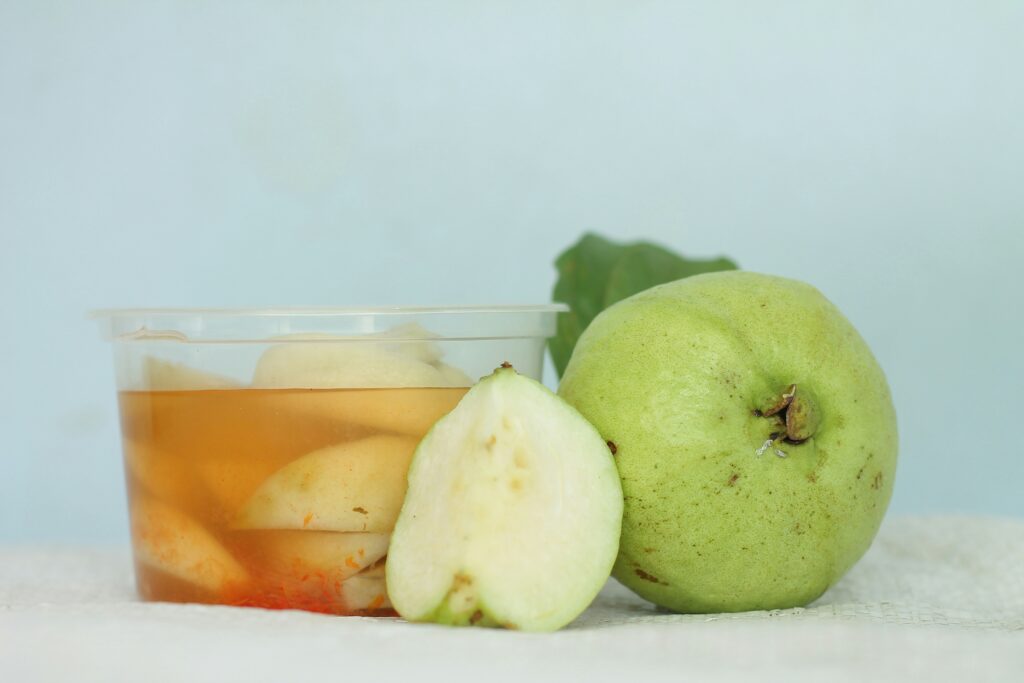
The scientific name of the guava is Psidium guajava. Guava belongs to the family Myrtaceae. It is easily pollinated by insects. It can easily be cultivated for its edible fruits. Guava is native to the Caribbean and northern South America. It is also native to Central America and Mexico. Guava was introduced to India by the Portuguese. India is the number one guava-producing country in the world.
Color: The color of guava varies in different species. The guava turns green when ripe.
Size: The size of a guava is usually 4-12 cm long. The typical size is 1 to 5 inches in diameter.
Shape: The size of the guava is oval to cylindrical in shape. They are usually round in shape. They look like a large time.
Flavor: Guava is sweet, unique, and almost universally pleasant. They taste like a hybrid between a pear and a strawberry. Guava is an aromatic fruit.
Nutrients
Guava is beneficial for health. One medium-sized guava of about 100 g contains the following beneficial minerals and nutrients:
- Calories 68
- Potassium 417 mg
- Total fat 1 g
- Sugar 9 g
- Saturated fat 0.3 g
- Sodium 2 mg
- Total carbohydrates 14 g
- Total fiber 14 g
- Protein 2.6 g
- Iron 1% of the daily value
- Calcium 1% of the daily value
- Vitamin B6 5% of the daily value
- Vitamin C 380% of the daily value
- Magnesium 5% of the daily value
| How to grow guava? |
Health Benefits of Guava
Guava fruits are rich in Vitamin C, fiber, potassium, and antioxidants. They have seeds that are edible and rich in nutrients.
Boost heart health
Guava helps boost heart health in a number of ways. Guava leaves contain high levels of vitamins and antioxidants that help to protect your heart from damage by free radicals. The high percentage of soluble fiber and potassium in guavas helps to improve heart health. Extract is also linked to lowering blood pressure.
Relief from menstrual pain
Guava leaf extract may reduce the pain intensity of menstrual cramps. Taking guava leaf extract in your diet is also thought to be linked to helping to relieve uterine cramps.
Boost immunity
Guava is one of the best fruits that is enriched with Vitamin C. It helps to boost the body’s natural defense system. It helps the body to be more resistant to bacteria and viruses.
Promote weight loss
One medium-sized guava contains about 54 calories that can be incorporated into a weight loss diet. It is also rich with pectin, a fiber that keeps you full and naturally reduces hunger.
Improve skin health
Red and pink guava contain a large amount of lycopene, which is an excellent source for skin glowing and an antioxidant compound. It helps to protect the skin from damage by the sun’s ultraviolet rays. Also, it prevents premature skin aging.
Benefits the digestive system
Guavas are an excellent source of dietary fiber. Guavas aid in healthy bowel movements and also prevent constipation. Guava leaf extract benefits digestive health. It reduces the intensity and duration of diarrhea.
Lower blood sugar level
Guava can help lower blood sugar control. Guava leaf extract improved blood sugar levels and insulin resistance. Recent studies showed that drinking leaf tea may be linked to be lower blood sugar level after a meal.
Side Effects of Guava
There are no serious side effects of guava fruit and leaves for those taking them in moderate amounts in their diet. If you are allergic to guava or are health-conscious, avoid adding them to your diet more than the normal amount.
FAQ’s
Is guava better than an apple?
Guava and apples are both healthy fruits with unique benefits, making it difficult to declare one definitively “better” than the other. Guava is particularly high in vitamin C and fiber, while apples are known for their fiber and low calorie count.
What is the guava fruit good for?
Guava fruit is a good source of vitamin C, fiber, and antioxidants, and it offers various health benefits. It can help manage diabetes, boost heart health, improve digestion, aid weight loss, and enhance immunity. Guava can also help relieve painful menstrual cramps and potentially have an anti-cancer effect.