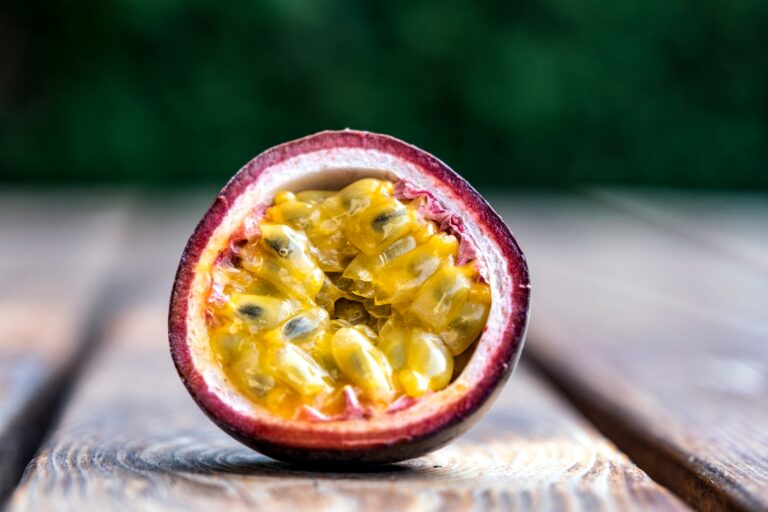

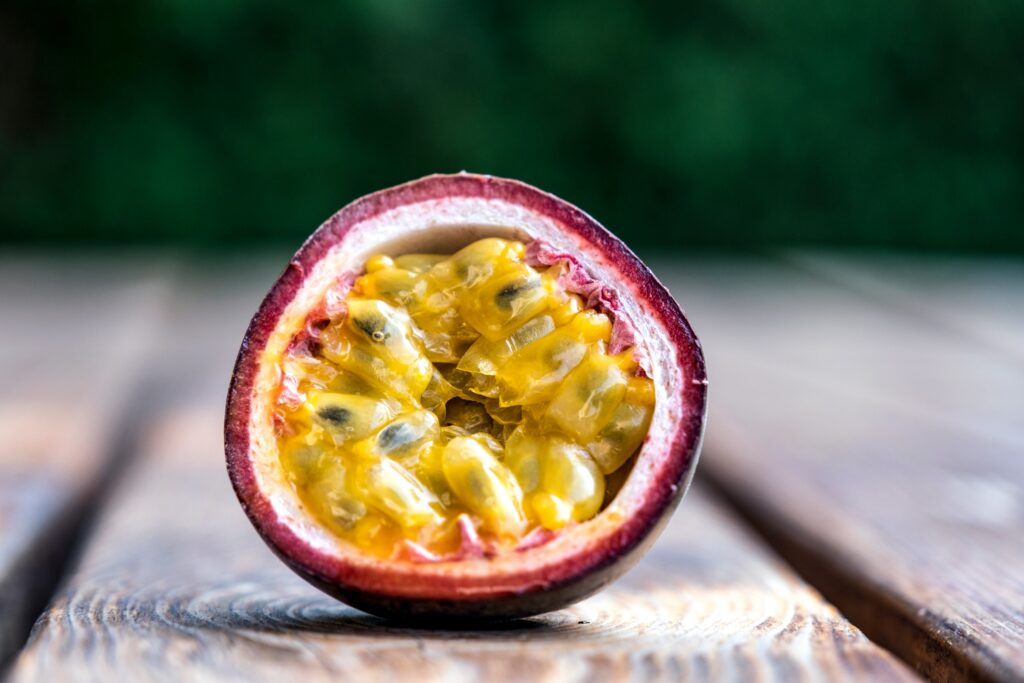
The scientific name of passion fruit is Passiflora edulis. It is also known as purple granadilla, grenadine, and passion flower. Passion fruit is native to Southern Brazil. This fruit has been cultivated since ancient times. Passion fruit is native to Brazil. It is found to be growing wild in many parts of the West. Passiflora aurantia is a species of native passion fruit. Brazil is the world’s farthest most productive producer of passion fruit, with about 90% of the production.
Color: Passion fruit has green to brown skin that turns yellow to purple. Passion fruit is usually yellow to orange.
Shape: Passion fruits are round to oval in shape. They have a fascinating look.
Size: The size of passion fruit is about 4 to 7.5 cm in diameter. The rind of passion fruit is 9 to 13 mm thick.
Flavor: The flavor of Passion fruit is citrusy with hints of melon or kiwi. Ripe passion fruit has a distinct musky flavor.
Nutrients
Passion fruit contains a large amount of beneficial nutrients. A medium-sized passion fruit of about 100 grams contains the following beneficial nutrients:
- Calories 97
- Total fat 0.7 g
- Total carbohydrates 23 g
- Saturated fat 0.1 g
- Sodium 28 mg
- Sugar 11 g
- Iron 8% of the daily value
- Potassium 348 mg
- Protein 2.2 g
- Dietary fiber 10 g
- Vitamin C 50% of the daily value
- Magnesium 7% of the daily value
- Calcium 1% of the daily value
| How to grow passion fruit? |
Health Benefits of Passion Fruit
Passion fruit is rich in vitamins, antioxidants, and minerals. These help to protect the body from damage caused by the free radicals. These nutrients also help fight against disease. Passion fruit plays a vital role in collagen synthesis.
Protect against sun damage
The antioxidants present in passion fruit help to protect the skin against harmful UV rays and reduce the risk of sun damage. The high amount of Vitamin C present in passion fruit also helps to brighten the skin. It is a natural sunscreen.
Promotes skin Healing
Passion fruit contains essential nutrients like vitamin A and Vitamin C, which are known to promote skin healing. It can also be used to accelerate the healing process of wounds, other skin irritants, and scars.
Supports heart health
Passion fruit has been shown to benefit heart health. This fruit is rich in dietary fiber that helps to regulate the cholesterol level. Soluble fibers are present in the form of pectin, which binds to the cholesterol in the digestive tract and prevents its absorption in the body. A large amount of potassium is present, which helps to regulate blood pressure, which is helpful for heart health.
Support gut health
Passion fruit is a good source of fiber that offers benefits to the gut microbiome. Nutrient-dense foods are rich in fiber and help to maintain gut health, and also nourish the good bacteria in the digestive tract.
Side Effects of Passion Fruit
People who are allergic to latex may be affected because of passion fruit. They also contain some chemicals that have the potential to form cyanide. Purple passion fruit peel may contain chemicals called cyanogenic glycosides.
FAQ’s
Can passion fruit make you sleepy?
Yes, passion fruit can make you sleepy. Passion fruit contains a compound called harman, which has sedative properties, and it is rich in magnesium, which can help relax muscles and reduce anxiety, both of which can contribute to drowsiness and sleepiness. Additionally, the fruit is a good source of vitamins C and A, potassium, and fiber, further contributing to its calming effects and potential for promoting restful sleep.
How many passion fruits can I eat per day?
It’s generally recommended to eat 5-6 passion fruits per day as part of your daily fruit intake. This is because passion fruit is a good source of fiber and vitamins. However, some sources suggest that eating more than 2-3 passion fruits can cause digestive issues like diarrhea.