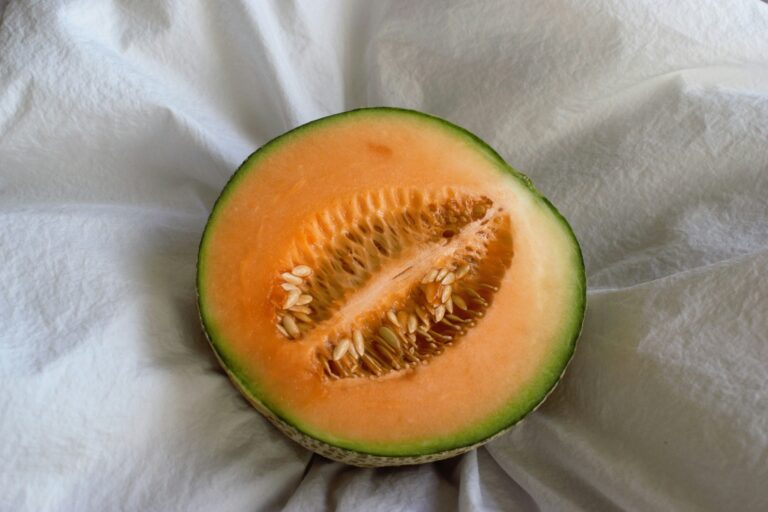

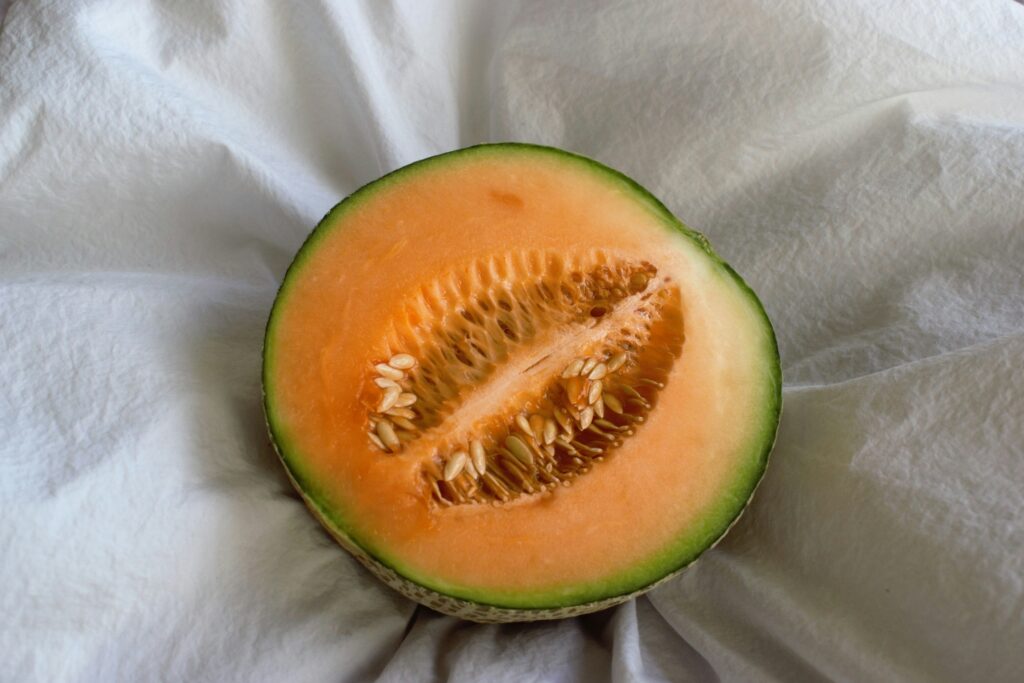
The scientific name of cantaloupe is Cucumis melo. The other names of cantaloupe are musk melon, Persian melon, and rock melon. It is a member of the Cucurbita family, Cantaloupe first originated in the Middle East or India. Cantaloupe was first introduced to Europe in the 15th century and became a popular fruit due to its sweetness. Cantaloupe was originally cultivated in India, China, and Pakistan.
Color: The color of cantaloupe is orange due to the presence of beta-carotene, an orange pigment that serves as a source of vitamin A.
Shape: Cantaloupes are round to slightly oval in shape. They are considered round.
Size: Cantaloupes are small to medium-sized melons, 15-25 cm in length and 1-11 pounds.
Flavor: Cantaloupes have a distinctive sweet flavor. Over-ripe fruit has a mealy and mushy texture.
Nutrients
Cantaloupe has the richest profile of nutrients like calcium, potassium, phosphorus, zinc, and magnesium. 100 g of cantaloupe contains the following beneficial nutrient profile
- Calories 34
- Saturated fat 0.1 g
- Potassium 267 mg
- Protein 0.8 g
- Total fat 0.2 g
- Dietary fiber 0.9 g
- Iron 1% of the daily value
- Magnesium 3% of the daily value
- Sodium 16 mg
- Total carbohydrate 8 g
- Sugar 8 g
- Vitamin C 61% of the daily value
- Vitamin B6 5% of the daily value
| How to grow cantaloupe? |
Health Benefits of Cantaloupe
Cantaloupes are almost as juicy as watermelons. It helps to prevent asthma and protect against age-related macular degeneration. Eating cantaloupe also reduces the risk of cancer.
Support Eye health
Cantaloupe is good for eye health due to the beta-carotene content. Cantaloupe also contains zeaxanthin and lutein. These are two fat-soluble antioxidants belonging to the class of carotenoids called xanthophyll.
Lowers blood pressure
Cantaloupe is naturally low in sodium and high in potassium. This is effective at reducing high blood pressure. Cantaloupe is also a heart-healthy choice. Choosing food rich in potassium, like cantaloupe, is linked with a reduced rate of stroke.
Prevents dehydration
Eating cantaloupe helps you to stay hydrated. Cantaloupe contains over 90% water. It is also a good source of electrolytes. Low intake of potassium is associated with health risks, including severe dehydration.
Heals from sunburn
Cantaloupe, when placed on sunburn skin, the extract increases anti-oxidant activity, boosting melanin levels and reducing sunburn cells. Eating cantaloupe doesn’t replace the need for sun protection.
Good for kidneys
Cantaloupes are good for kidney health as they limit the intake of fruits high in potassium, including bananas, dates, cantaloupe, and apricots. Dried fruits are often high in carbohydrates and potassium, which may lead to an increase in blood sugar levels if consumed in excess amounts.
Good for liver health
Cantaloupe is rich in Vitamin C, which is great for digestive and liver health. Fiber is also present in cantaloupe,e good for liver health along with the potassium, which is beneficial for tissue and cell functions.
Side Effects of Cantaloupe
Diarrhea is most likely to occur when canned cantaloupe is spoiled. If you have a chronic disease, higher potassium foods may increase the risk of hyperkalemia.
FAQ’s
When not to eat a cantaloupe?
Cantaloupe is generally safe to eat, but there are some specific situations where it might be best to avoid it or be cautious about consumption. In general, you should be cautious about eating cantaloupe if you have a cantaloupe allergy or if you have gastrointestinal issues. Those with kidney problems should also be cautious due to the potassium content. Additionally, individuals with diabetes should monitor their intake and be mindful of portion sizes.
What are the benefits of eating cantaloupe?
Cantaloupe offers various benefits due to its rich nutrient profile. It’s a good source of vitamins A and C, which act as antioxidants and support immune function. Cantaloupe also provides potassium, fiber, and hydration, which can contribute to heart health, digestion, and overall well-being.